Troubleshooting FAQ
17 questions answered by NSW's only Bona Premier Dealer.
Troubleshooting (17)
What should I do when I have a problem with my timber floor?
Contact the original contractor first -- they've got rectification rights under Australian Consumer Laws for minor repairs. If that doesn't sort it out, get a second opinion. You can do an onsite verbal meeting, a full written inspection with results within 10 working days, or a specialised written report for complex disputes. A professional floor sander can also give you an expert assessment of floor problems.
What is cupping in timber floors?
Cupping is when board edges sit higher or lower than the centre. It's usually caused by heat or dry conditions creating a moisture imbalance through the board thickness. It's one of the most common issues in solid timber floors. A professional floor sander can work out what's causing it and tell you the right fix.
What is peaking in timber floors and how is it different from cupping?
Peaking looks like cupping, but it's a different problem. It's caused by expansion pressure between boards rather than a moisture gradient through the board itself. You get a pressure-related cupped appearance, and it's particularly common in higher density backsawn hardwoods installed in moderate to humid areas. Getting the diagnosis right matters -- the fix for peaking is different to the fix for cupping.
What causes buckling in timber floors?
Buckling is when multiple boards lift above the surrounding floor. It's typically caused by excessive moisture absorption or not enough expansion allowance at the perimeter. With floated floors, it's almost always about inadequate expansion gaps. A professional floor sander makes sure there's proper expansion allowance to prevent this.
Why does my floating floor make creaking noises?
Floated floors commonly creak from subfloor imperfections and joint movement between boards. A bit of noise in limited areas is normal and acceptable. But if it's persistent and loud in your main walkways, that needs fixing. Good subfloor preparation is the key to a quiet floating floor.
Why does my glued timber floor sound hollow when I walk on it?
Hollow or drummy sounds in adhesive-fixed floors over concrete slabs don't necessarily mean there's a problem. They're caused by undulations in concrete slabs (up to 3mm over 3m is typical) and the adhesive application method. Moisture-curing polyurethane adhesives also keep some degree of flexibility, which contributes to the sound. A floor sander can check whether the hollow sounds in your floor are normal or actually need attention.
What causes squeaking in timber floors?
Squeaking comes from board-on-board rubbing at tongue and groove joints, board-on-nail friction, subfloor framing movement, or door joinery rubbing. Don't take excessive squeaking lightly though -- the annoyance can be a legitimate concern. A floor sander can track down the source of the squeaking and work out the right fix for it.
What problems can occur with lyctus borers in hardwood floors?
Lyctus borers can infest hardwood flooring, creating small holes and powder trails as the larvae eat through the timber. ATFA provides technical information on both lyctus/borers and termites in timber floors. If you spot borer activity, get it assessed quickly -- you'll need advice on treatment and possibly replacing affected boards.
What is tattooing on timber floors?
Tattooing is a recognised issue in timber flooring -- it refers to marks or patterns that get transferred onto the floor surface from external sources. ATFA documents it in their technical information sheets. If it happens, a floor sander can identify tattooing and work out the right remedial treatment.
What happens to timber floors after flood or water inundation?
Flood-inundated timber floors need careful assessment and staged drying to avoid permanent damage. ATFA covers this as a specific topic. High-density hardwoods are slow to take up moisture but equally slow to release it, so recovery takes considerable time. Don't rush the drying process -- patience makes the difference between saving the floor and losing it.
What happens when high-density hardwood floors get sustained moisture exposure?
High-density hardwoods are slow to take up moisture, but with sustained exposure they'll definitely absorb it and expand -- potentially causing peaking, tenting, or buckling. Recovery is equally slow and it'll take considerable time for moisture contents to get back to normal levels. You can't rush it -- the timber has to dry out at its own pace.
What should I do about termites in my timber floor?
Termites in timber floors need professional assessment and treatment. ATFA provides technical information on this alongside lyctus borer management. Early detection and treatment is essential to prevent structural damage. If you spot termite damage during a floor assessment, get specialist treatment organised straight away.
How do I fix tannin bleed on a finished floor?
Sand back to bare timber. There's no chemical fix -- the tannin is in the cured film, not on top of it. Sand back, apply one coat of Bona Prime Intense at 8 square metres per litre, let it dry 1-2 hours, then two coats of your chosen topcoat. Prime Intense controls the tannin so it doesn't bleed through again. Don't attempt to screen-and-recoat over tannin bleed -- it'll show through the new coat. Full guide at sand-aid.com/guides/tannin-bleed-blackbutt.html
How to avoid fish eyes in water-based polyurethane?
Fish eyes are caused by silicone or oil contamination. Before coating: vacuum and tack-rag the entire floor, wipe down walls and ledges above the floor, change clothes between sanding and coating, turn off HVAC, ban other trades from the room, and ask the client what cleaners or polishes they used on the floor. If the floor previously had silicone-based furniture polish (Pledge, Mr Sheen), the silicone has soaked into the grain and sanding may not fully remove it. Full troubleshooting guide at sand-aid.com/guides/fish-eyes-water-based-finish.html
Can a bad DIY floor sanding job be fixed?
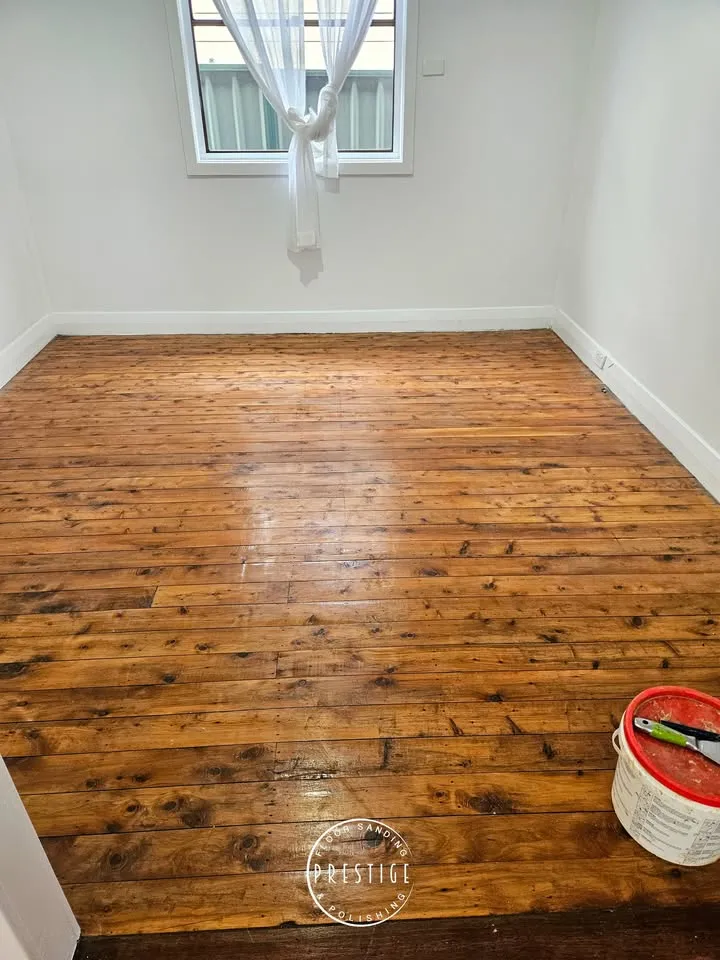 Usually. The most common DIY problems are drum marks (gouges from the belt sander), uneven edges (poor edger technique), and coating failure (wrong prep or wrong product). A professional sander starts by levelling the drum marks with a coarse grit, then works through the sequence to remove the evidence. If the DIY coating is peeling, it gets sanded off completely. The timber underneath is almost always fine.
Can pet damage on timber floors be repaired?
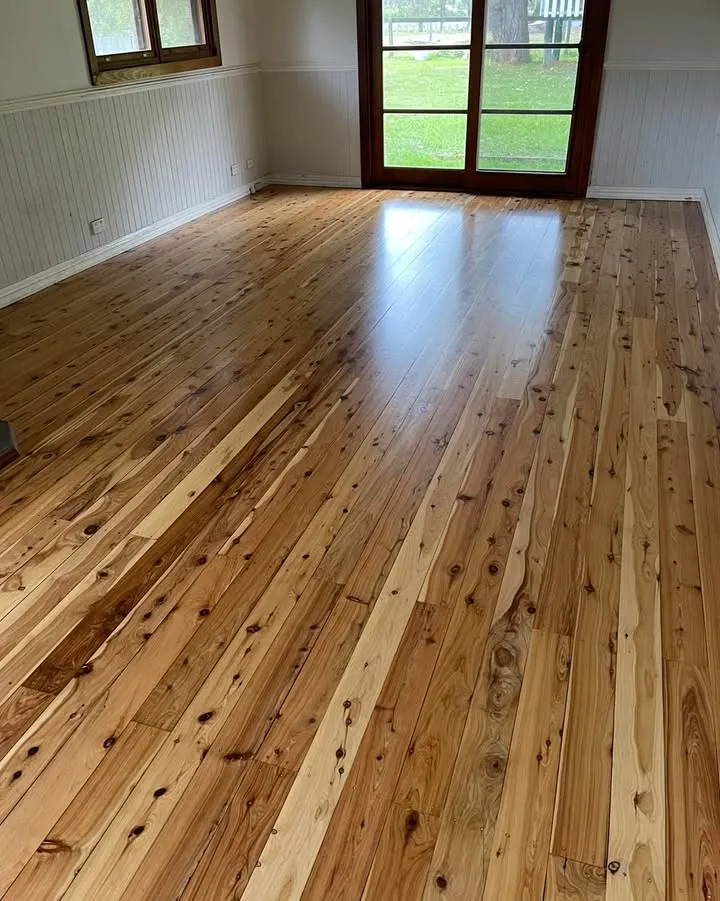 In most cases, yes. Dog scratches and urine stains are the two most common issues. Scratches sand out during the normal grit sequence. Urine stains penetrate deeper -- a coarser starting grit (P24-P36) may be needed on the affected area, then blend into the surrounding floor. If the stain has gone through to the subfloor, board replacement may be needed for that section. Recoat the whole room for a consistent finish.
Can water-damaged timber floors be saved?
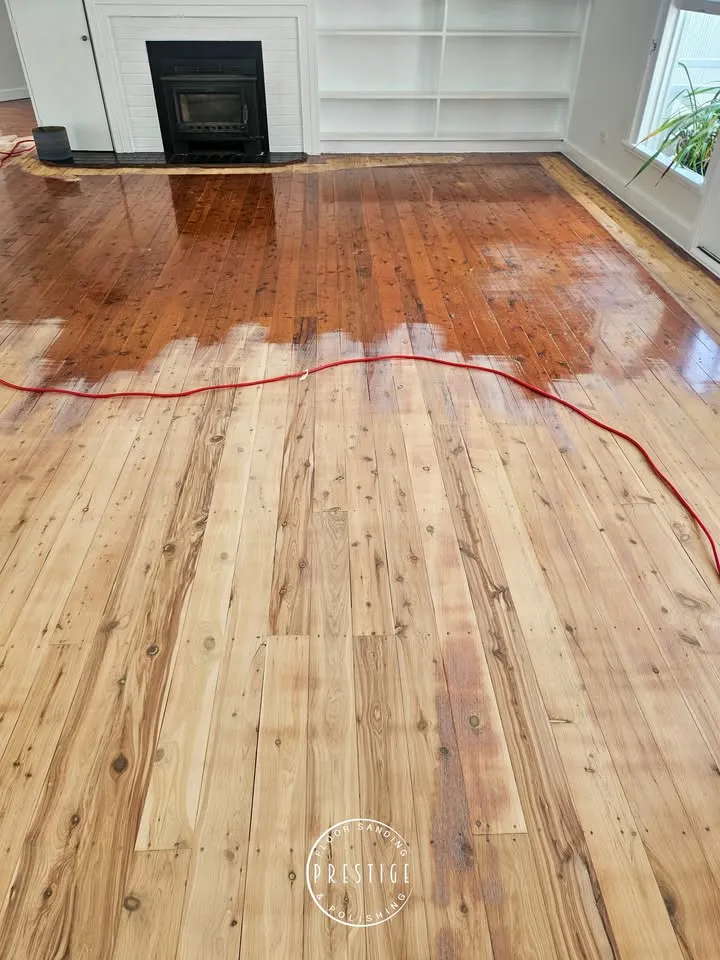 Depends on how long the water sat. Short-term water exposure (burst pipe, spill left overnight) usually only affects the coating -- sand it back and recoat. Prolonged water exposure causes cupping, swelling, and in severe cases rot. If the boards have cupped but are still structurally sound, let them dry completely (check with a moisture meter, target 10-12%), then sand flat and recoat. Boards that are soft, black, or crumbling need replacing.
Still have a question?
Ring Brad. 24 years of Bona experience. Straight answer, no runaround.
Call 1300 950 551